
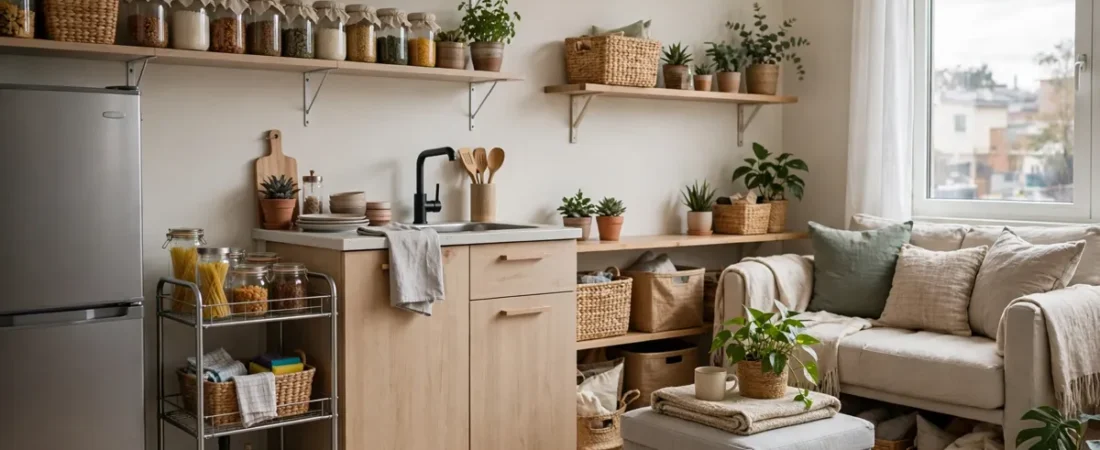
If you rent a small apartment, you already know the real problem. It is not that you own too much stuff. It is that almost every storage solution sold in stores assumes you can drill into walls you do not own.
Floating shelves? Screws. Wall-mounted racks? Screws. Most “small apartment storage ideas” quietly ignore the lease you signed — and the security deposit you would like back.
This guide is different. Every idea below is no-drill, removable and deposit-safe. Each one comes with the exact measurements to check before you buy, a Deposit Risk Rating, and a budget tier, so you can see at a glance what it costs and what it risks.
How the Deposit Risk Rating works: None means the product just sits, stands or hangs with its own weight — zero contact risk. Low means it touches walls or doors with padding, hooks or removable adhesive that comes off cleanly when removed correctly. Nothing in this guide rates higher than Low, because nothing here should ever cost you a deposit.
Before You Buy Anything: Measure These 7 Things First
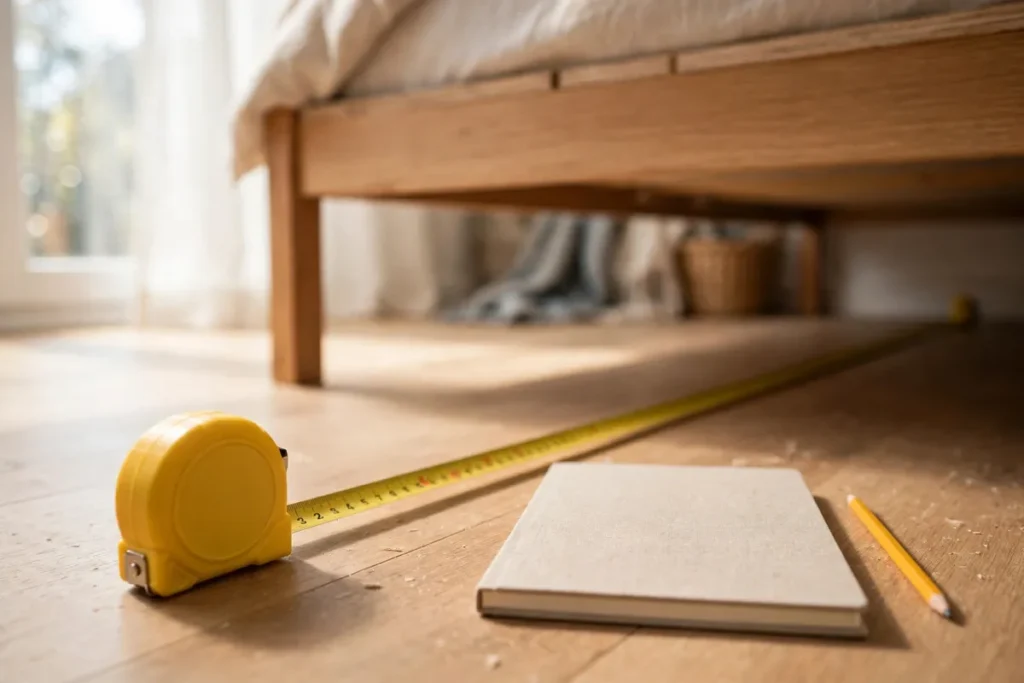
Most wasted money in small apartments is spent on storage that almost fits. Spend ten minutes with a tape measure first. These are the seven measurements that decide almost every purchase in this guide:
- Under-bed clearance — floor to the bottom of the bed frame. Most frames give 5–7 inches; low-profile frames can be under 4 inches. This decides which under-bed bins will actually slide in.
- Cabinet interior height and depth — standard kitchen base cabinets are about 22 inches deep; uppers are about 11–12 inches deep. Measure yours, because older buildings vary.
- The gap beside your fridge — often 2–6 inches of dead space. Under 3 inches fits almost nothing; 4–6 inches fits a slim rolling cart.
- Door thickness and trim — over-door hooks need roughly 1⅜–1¾ inches of door thickness, and the door must still close with the hook on. Check the gap above the door too.
- Closet rod height and depth — hanging organizers are usually about 12 inches wide and 50–60 inches long. If your rod is low, a long organizer will pool on the floor.
- Shower/tub surround width — tension poles and hanging caddies depend on this; most tubs are about 30 inches wide at the surround.
- Entryway wall run — measure the wall beside your door before buying any stand or rack. In many studios this “entryway” is under 24 inches wide.
Write these numbers in your phone. Every idea below tells you which measurement matters, so you will never guess again.
The 21 Ideas at a Glance
| Solution | Budget | Deposit risk | Where it works |
|---|---|---|---|
| Slim rolling cart (fridge gap) | $25–$40 | None | Kitchen |
| Under-sink stackable shelves | $15–$30 | None | Kitchen, Bathroom |
| Cabinet door organizer (over-door) | $12–$25 | Low | Kitchen, Bathroom |
| Tiered spice riser | $10–$20 | None | Kitchen |
| Tension rod under sink | $8–$15 | None | Kitchen, Bathroom |
| Over-shower-head caddy | $15–$30 | None | Bathroom |
| Over-toilet freestanding shelf | $35–$70 | None | Bathroom |
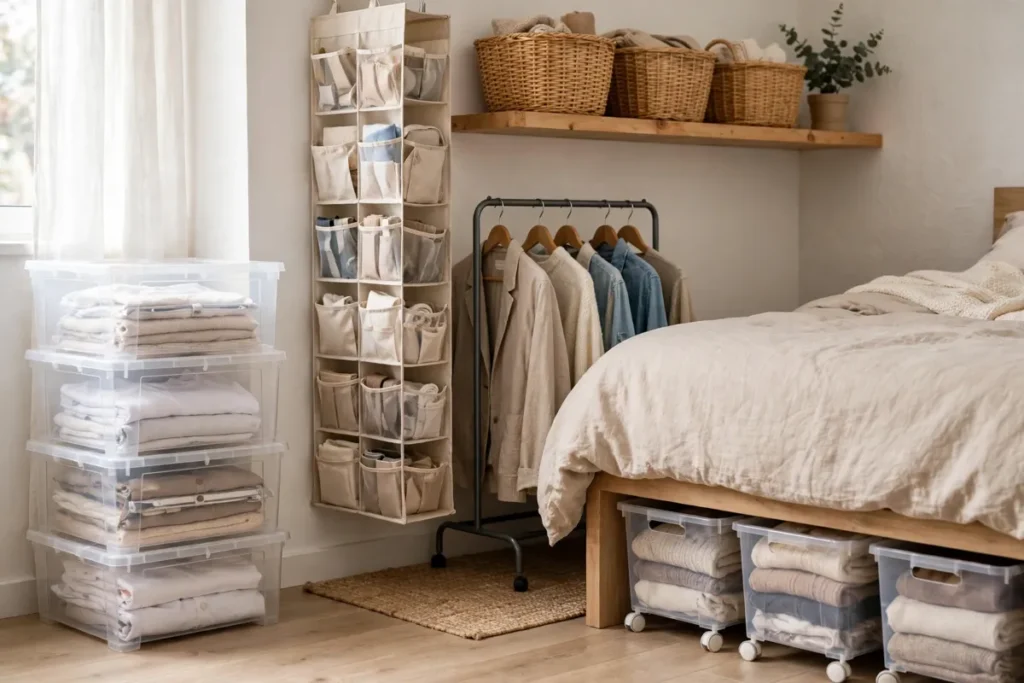
| Rolling under-bed bins | $20–$45 | None | Bedroom |
| Hanging closet organizer | $15–$30 | None | Closet |
| Over-door shoe organizer | $10–$20 | Low | Closet, Entryway |
| Freestanding garment rack | $30–$60 | None | Bedroom, Studio |
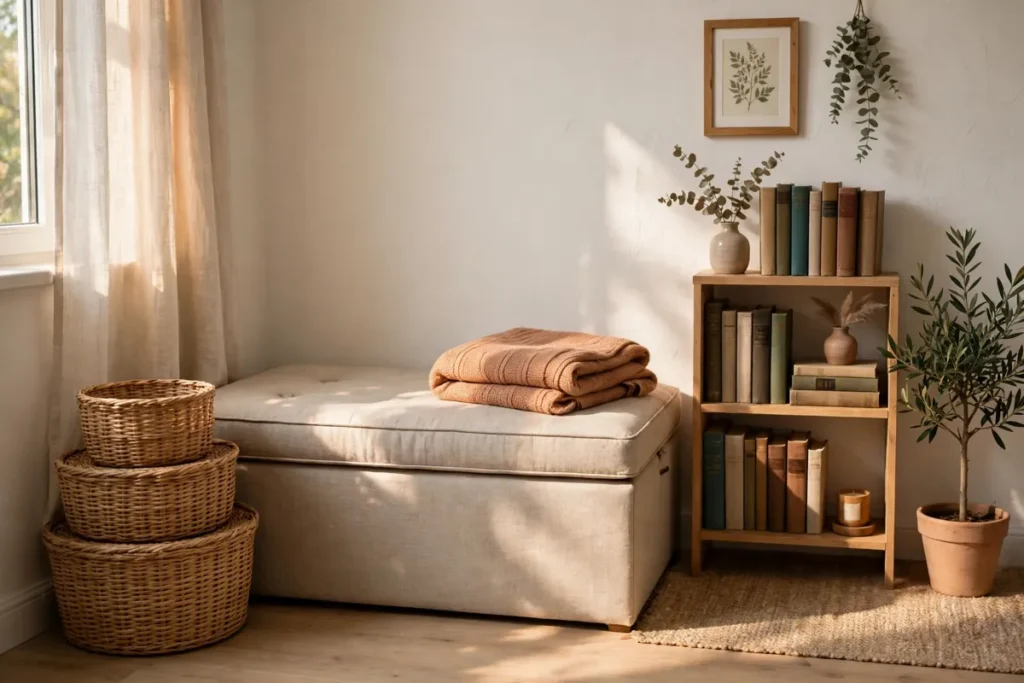
| Storage ottoman | $30–$60 | None | Living room, Studio |
| Entryway ladder shelf / leaning stand | $40–$90 | Low | Entryway |
| Bed risers (for storage height) | $15–$30 | None | Bedroom |
Prices are typical US retail ranges (Amazon, Walmart, Target, IKEA) at the time of writing — always confirm the current price before buying.
Kitchen: Where Renters Lose the Most Space
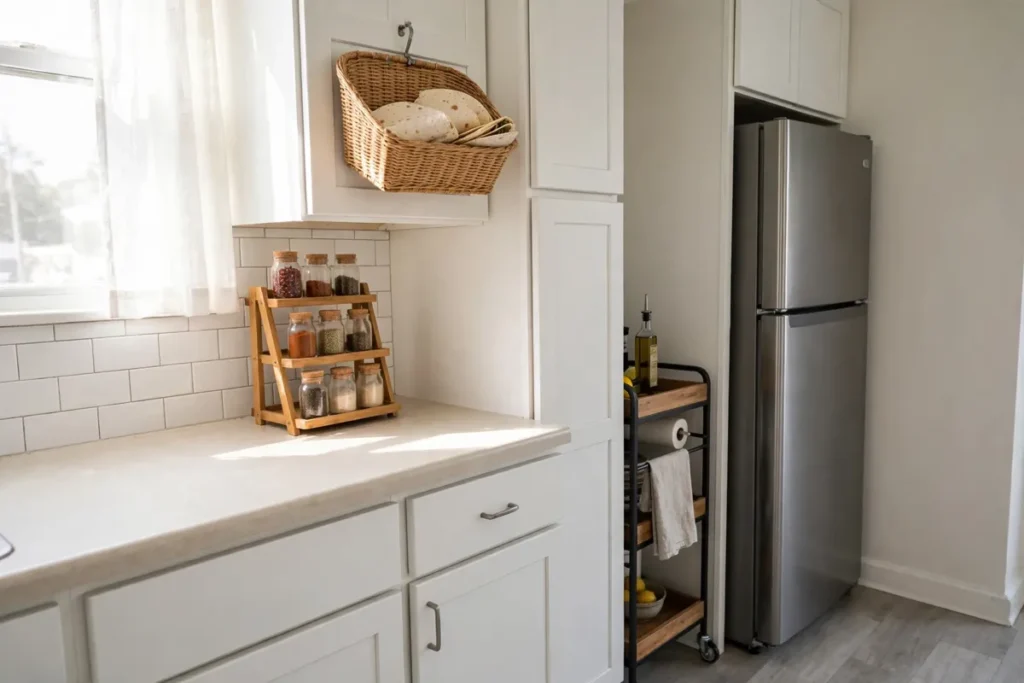
In most small rentals the kitchen is the worst room: no pantry, two usable cabinets, and counter space that disappears the moment you own a kettle. Start here.
1. Claim the fridge gap with a slim rolling cart
Measure first: the gap beside your fridge (measurement #3). Carts come as slim as 4–5 inches wide.
Deposit Risk: None. It stands on its own wheels and touches nothing.
Budget: Under $50. A 3–4 tier cart holds spices, oils, cans or cleaning supplies — roughly a whole cabinet’s worth of small items. If your gap is under 4 inches, skip the cart and use that wall for a magnetic strip alternative below instead.
2. Double your under-sink cabinet with stackable shelves
The space under a sink is tall but usually wasted around the pipes. A two-tier stackable shelf or a small under-sink rack builds a second level around the plumbing.
Measure first: cabinet interior height and the position of your pipes (measurement #2).
Deposit Risk: None.
Budget: Under $25. This one change typically frees an entire upper cabinet.
3. Use the inside of cabinet doors
Over-cabinet-door baskets hang on hooks over the door top and hold wraps, bags, lids or cleaning bottles inside the door — space that is currently air.
Measure first: door thickness and clearance (measurement #4); the door must close without the basket hitting shelves inside.
Deposit Risk: Low. Choose hooks with foam padding so the door paint is protected.
Budget: Under $25.
4. Tiered risers so you can see everything
Deep cabinets hide food behind food. A tiered riser (like small stadium steps) for spices or cans means the back row is visible — no more buying a third jar of paprika.
Measure first: shelf depth; risers are usually 9–12 inches deep.
Deposit Risk: None.
Budget: Under $25.
5. A tension rod under the sink
Mount a short spring tension rod inside the under-sink cabinet and hang spray bottles by their trigger handles. It uses the dead air at the top of the cabinet and keeps the bottles upright.
Measure first: inside width of the cabinet.
Deposit Risk: None. Tension only — no screws, no adhesive.
Budget: Under $25.
Lease check (kitchen): all five ideas avoid drilling and adhesive entirely, or use padded hooks. The one thing to avoid in kitchens is adhesive hooks on painted cabinet faces in older buildings — paint there is often thin and can peel. Prefer over-door and freestanding options.
Bathroom: Big Wins in the Smallest Room
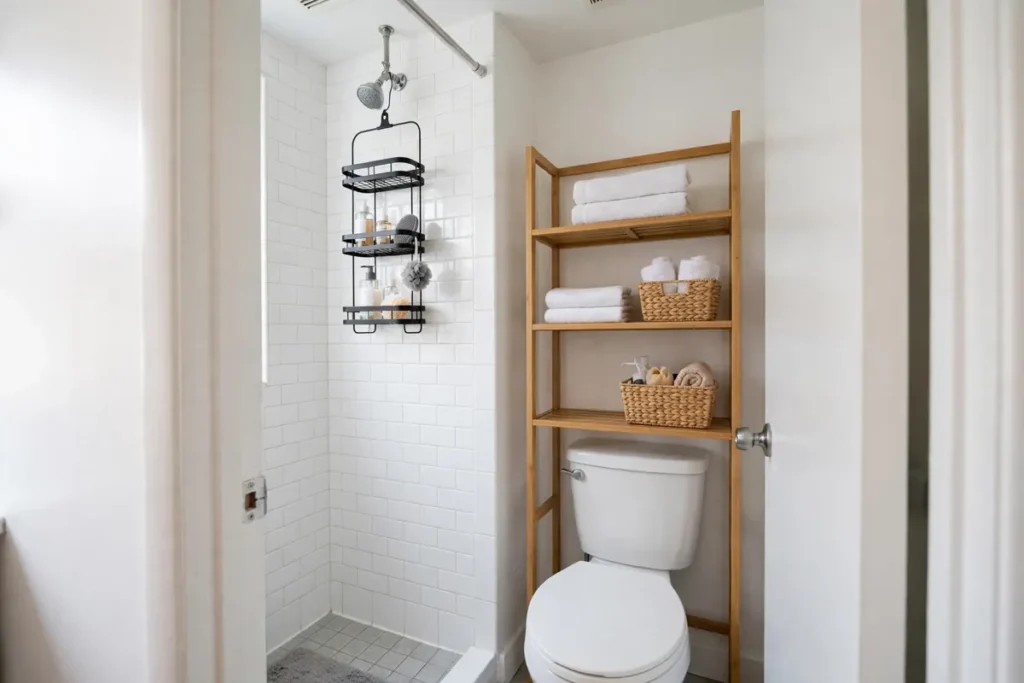
6. Over-the-shower-head caddy
Hangs from the shower head pipe — no suction cups, no adhesive, nothing on the tile.
Measure first: distance from shower head to the taps, so bottles clear the controls.
Deposit Risk: None.
Budget: Under $50.
7. Freestanding over-toilet shelf
A floor-standing unit that straddles the tank and gives you 2–3 shelves where there were none.
Measure first: floor-to-tank-top height and the width between the wall and any pipes; most units need about 24 inches of width and a tank no taller than roughly 33–34 inches from the floor to clear the lowest shelf.
Deposit Risk: None.
Budget: Under $100 (most are under $70).
8. Under-sink tension rod + stackable shelf
The same two tricks from the kitchen work under a bathroom sink — hang cleaning bottles on a tension rod and stack the rest.
Deposit Risk: None. Budget: Under $25.
Lease check (bathroom): avoid adhesive and suction products on painted drywall in bathrooms. Steam loosens adhesive, and a falling caddy at 2 a.m. is nobody’s friend. On tile, suction is usually safe, but hanging and freestanding options are still the zero-risk choice.
Closet & Bedroom: Your Biggest Hidden Storage
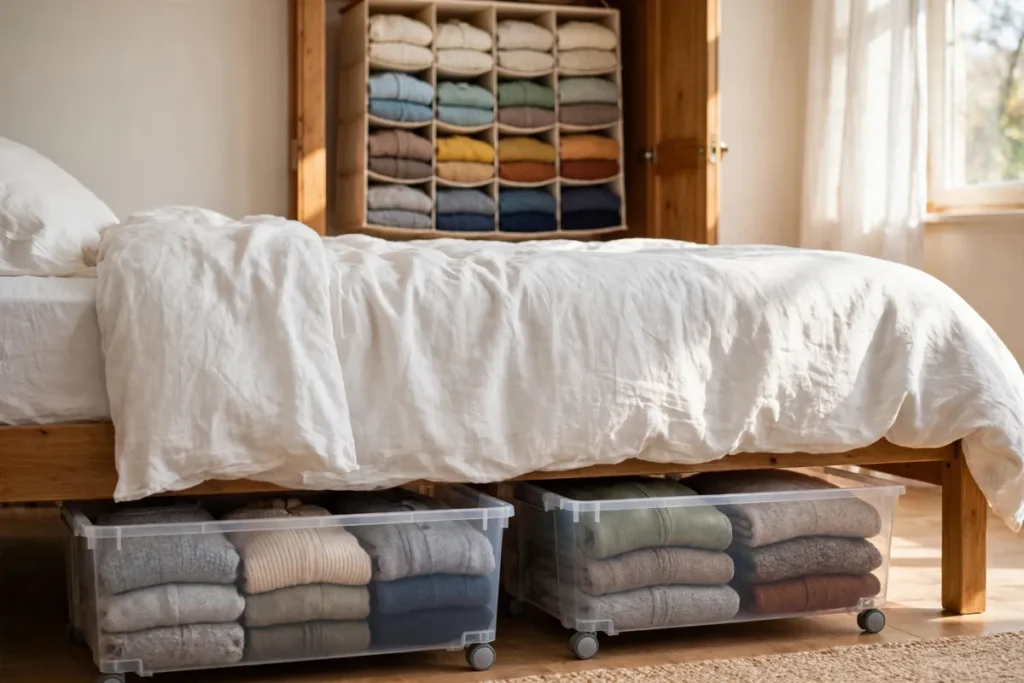
9. Rolling under-bed bins
Your bed sits on top of the largest unused storage area in the apartment. Rolling bins beat static boxes because you can reach the back without dragging.
Measure first: under-bed clearance (measurement #1). If you have under 5 inches, look for low-profile fabric bags instead, or see idea #12.
Deposit Risk: None.
Budget: Under $50 for a pair.
10. Hanging closet organizer
A fabric shelf unit that hangs from the closet rod instantly adds 4–6 shelves for folded clothes, freeing drawer space.
Measure first: rod height (measurement #5) — the organizer should end at least a few inches above the floor or the shoe pile below it.
Deposit Risk: None.
Budget: Under $50.
11. Over-door shoe organizer — not just for shoes
A clear-pocket over-door organizer on the closet or bedroom door holds shoes, yes — but also scarves, chargers, cleaning supplies, snacks and toiletries.
Measure first: door thickness and top gap (measurement #4).
Deposit Risk: Low. Use padded hooks and do not overload it; very heavy loads can stress door hinges over time.
Budget: Under $25.
12. Bed risers to create storage height
If your under-bed clearance is too low, sturdy bed risers add 3–5 inches of height and turn a useless gap into real storage.
Measure first: your frame’s leg/post size — risers have a cup size, and metal frames with thin legs need the right fit.
Deposit Risk: None.
Budget: Under $50.
Lease check: risers are furniture, not a modification — but protect the floor. Put felt pads under risers on hardwood so you do not trade a storage win for a floor-scratch deduction.
Living Room, Entryway & Studio Tricks
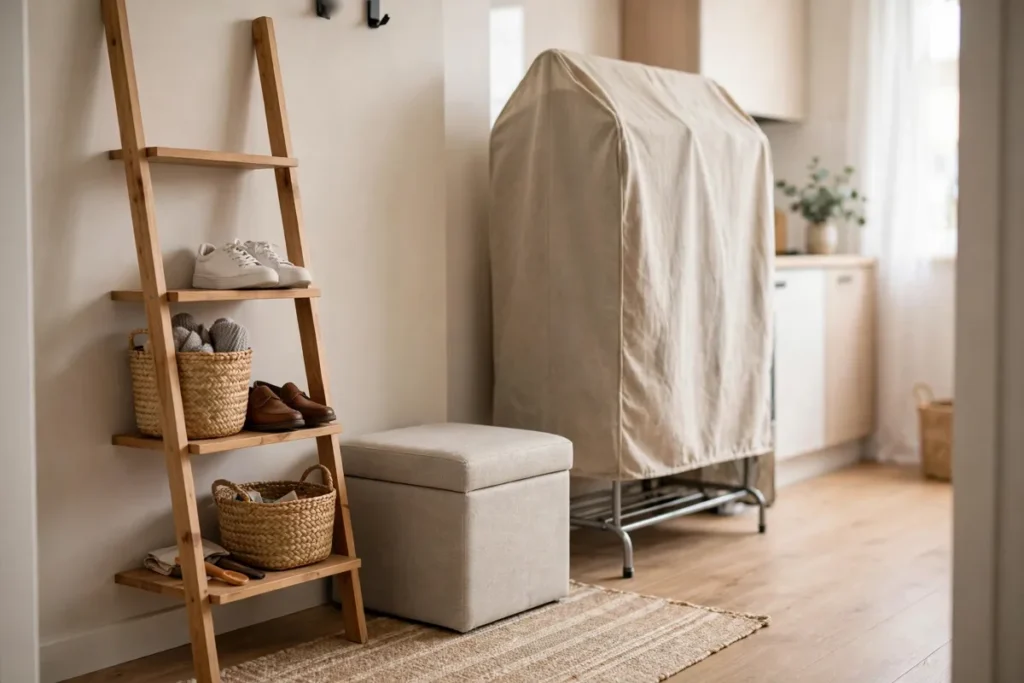
13. A storage ottoman does three jobs
Footrest, extra seat, and a hollow box for blankets, games or the stuff that usually lives on the sofa.
Deposit Risk: None. Budget: Under $100 (many under $60).
14. Entryway stand instead of wall hooks
Most renters cannot install the coat hooks every entryway article recommends. A slim freestanding hall tree or a narrow ladder-style stand gives you hooks, a shelf and shoe space in about 18–24 inches of wall run.
Measure first: entryway wall run (measurement #7).
Deposit Risk: None for freestanding stands. (Leaning ladder shelves rate Low — secure them so they cannot tip.)
Budget: Under $100.
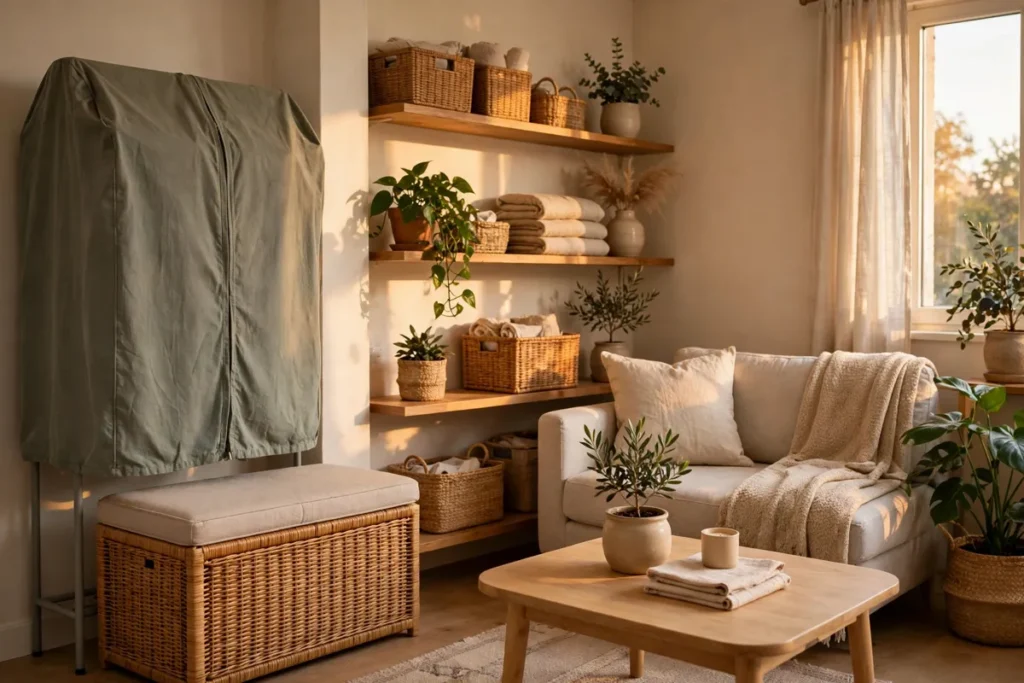
15. A garment rack as a second closet
In a studio, a freestanding garment rack plus a fabric cover creates a wardrobe where the lease gave you one tiny closet. It also works as a room divider.
Deposit Risk: None. Budget: Under $100.
The remaining ideas are variations on the same principle, and they are the ones renters actually use daily: 16. a rolling cart as a nightstand with storage, 17. stackable clear bins in the closet so you can see contents, 18. a second tension rod inside a deep closet for scarves and belts, 19. the back of the bathroom door for towels on an over-door rack (Low risk, padded hooks), 20. under-shelf baskets that clip onto existing kitchen shelves to add a level (None), and 21. a slim cabinet or shoe box bench by the door that hides the shoe pile entirely (None, under $100).
What NOT to Buy (Renter Edition)
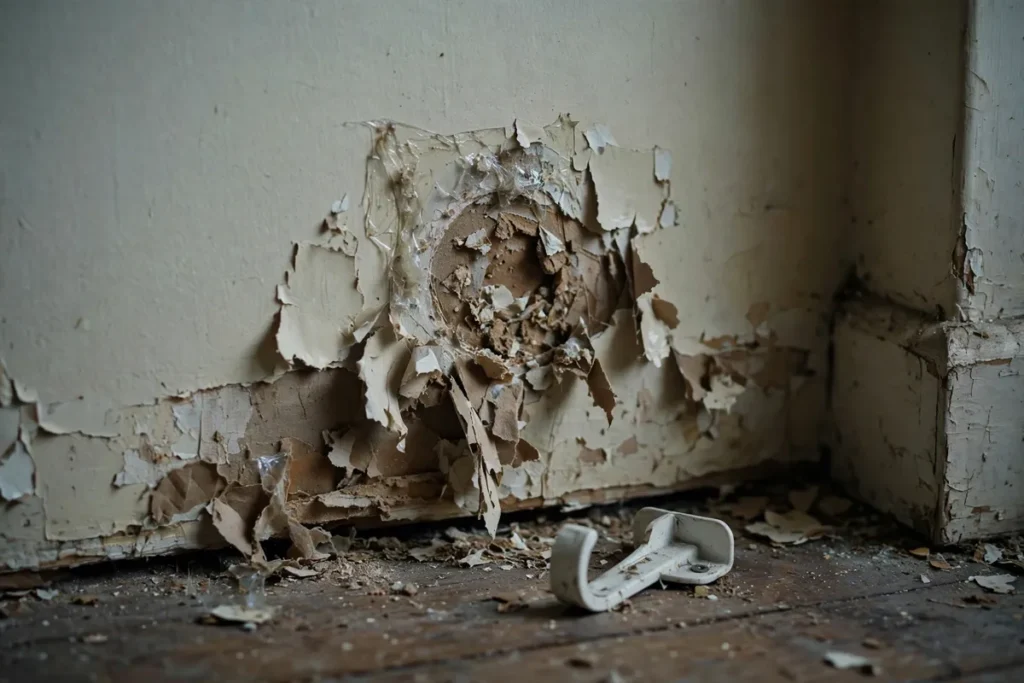
- Adhesive wall shelves rated for “heavy loads.” In real apartments they fail, and when they fail they often take paint — and sometimes drywall paper — with them. That is a deposit deduction with extra steps.
- Over-door organizers with thin metal hooks for very heavy loads. Bent doors and stressed hinges cost more than the organizer saves.
- Anything that needs “just two small screws.” Two small screws are two holes your lease almost certainly bans, and patch kits rarely match the paint exactly.
- Storage sized from the product photos. Online photos make bins look bigger. If the listing does not give dimensions in inches, skip it — and always compare with your seven measurements.
- A second bookshelf for a studio. Vertical, multi-use pieces (ottoman, hall tree, garment rack) almost always beat one more single-purpose shelf in under 600 square feet.
7 Mistakes That Cost Renters Their Deposit
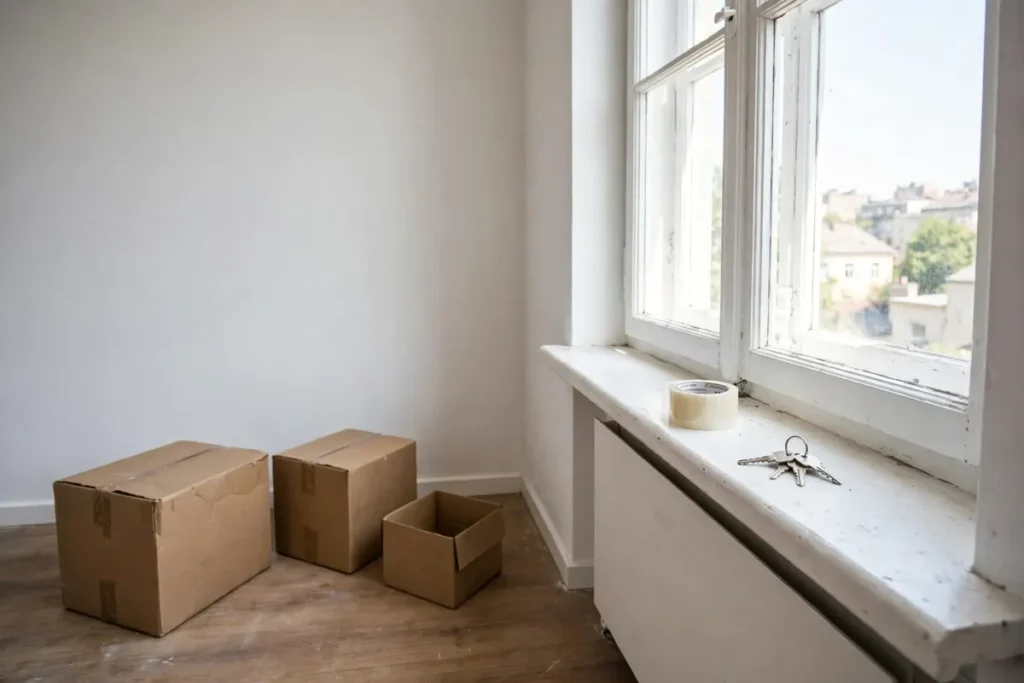
- Using adhesive hooks on painted walls in older buildings — the paint, not the hook, is the weak layer.
- Removing adhesive strips by pulling straight out instead of stretching them flat along the wall, as the instructions say.
- Hanging heavy items on over-door hooks without checking hinge screws first.
- Skipping felt pads under new furniture on hardwood floors.
- Blocking a vent, detector or access panel with tall storage — a lease and safety issue, not just clutter.
- Buying before measuring (see the seven measurements above — this is the expensive one).
- Throwing away the original packaging of big items before you know they fit; returns are your safety net.
Quick Checklist: The 10-Minute Renter Storage Audit
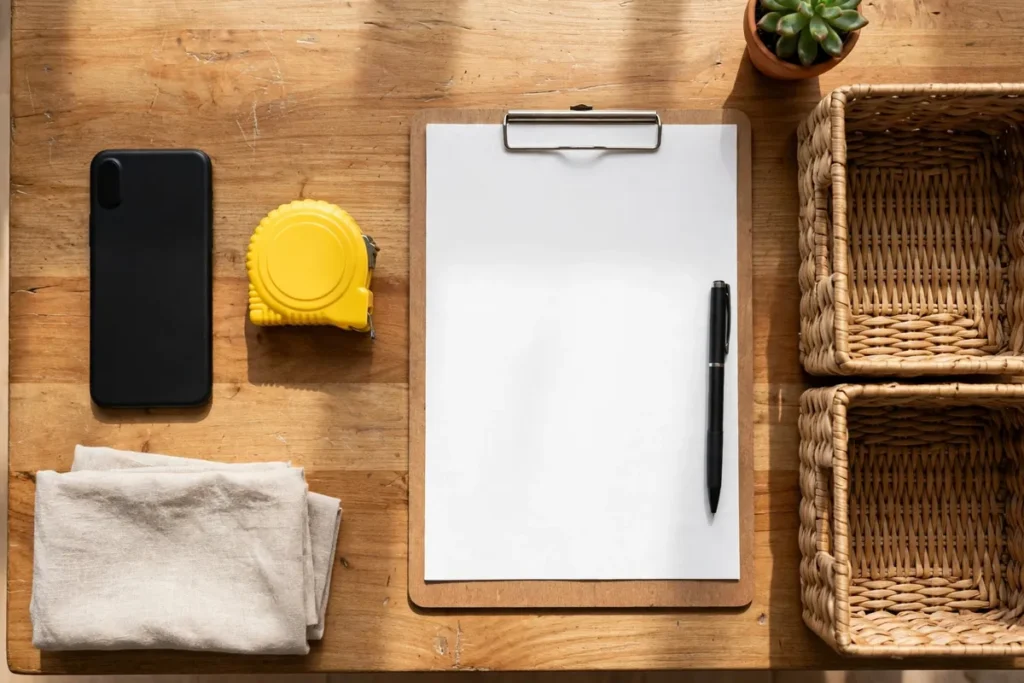
Walk your apartment with your phone and answer these:
- ☐ Fridge gap measured — is it 4 inches or more?
- ☐ Under-bed clearance measured — bins or risers needed?
- ☐ Under-sink cabinets — is the top half empty air?
- ☐ Cabinet doors — could the inside hold a basket?
- ☐ Closet rod — room for a hanging organizer?
- ☐ Bathroom — is the wall above the toilet bare?
- ☐ Entryway — where do shoes and keys land now?
- ☐ Every door — could the back of it work harder?
- ☐ Any purchase planned — do you have its dimensions in inches?
- ☐ Lease re-read — what does yours actually say about holes and adhesives?
If you ticked three or more problems, start with the kitchen ideas above — that is where renters win back the most space per dollar.
FAQ
Can my landlord ban over-door hooks and organizers?
Most standard leases ban holes and permanent changes, not removable organizers. But leases vary — check yours for any clause about door hardware or adhesives, and when in doubt, ask in writing. Freestanding options (risk rating: None) never need permission.
Will command strips really not damage paint?
Removed correctly — stretched flat along the wall, slowly — they are designed to come off cleanly. The risk rises on old, matte or freshly painted walls. For anything heavy or expensive to repair, this guide recommends hooks and freestanding options instead.
What is the cheapest storage win for a first apartment?
The under-sink tension rod and stackable shelf (ideas #5 and #8). Together they are usually under $25 and fix the two most wasted cabinets in the home.
How do I store things in a studio without it looking like a warehouse?
Closed storage over open storage: ottomans, bins with lids, a covered garment rack. If you cannot see the stuff, the room reads as a living room, not a storage unit.
Is it worth paying more for rolling under-bed bins?
Yes, if you will access them weekly. Wheels mean you use the full depth under the bed instead of just the front row.
The Bottom Line
You do not need permission, a drill, or a bigger apartment. You need the right measurements, products that respect your lease, and a rule of never buying storage you have not measured for.
Start with one room — the kitchen — and one idea. Then work through the audit above. Every guide on Housestow follows the same rules: no drilling, deposit-safe, real measurements, and honest budget tiers, so you can build a home that works — and still get your deposit back.
New here? Visit our Start Here page for the full roadmap by room.